
Do it yourself is the verdict from former lawyer L J Ross

When Louise Ross decided to take a career break in 2015, she knew she could write a short story that would entertain her friends.

What she didn’t know was that her new life as a self-publishing author was about to take off.

Writing under the name L J Ross, Louise has gone on to sell more than 7 million novels, reaching the top of the best-seller charts 18 times, and becoming the first self-published writer to be short-listed for the British Book Awards.

She’s been described by the press as the ‘Queen of Kindle’ and ‘the next J K Rowling’.

But the 38-year-old is quick to admit that switching from lawyer to thriller writer was something of a gamble.

Louise said: “I had never written a full book before – I didn’t know I could.

“I thought, ‘I’ll just see if I can write a chapter’ and then, ‘I’ll see if I can write two’.

“Suddenly I had a book.”

Louise’s debut novel, Holy Island, is a murder mystery set on Lindisfarne, and the first in her hugely successful series of DCI Ryan crime books.

She added: “I published the first book on January 1, 2015 using the Amazon Kindle Direct Publishing (KDP) platform.

“The KDP platform allows authors to see their sales in real time, so it was exciting to see around 25 sales on release day.

“I was grateful that most of my family and friends must have bought a copy and didn’t expect many more!

“However, over the next few weeks, the sales gradually increased until the book eventually made it to number one on the Amazon UK chart in May 2015.

“It was around this time I first appreciated that a good number of people enjoy reading my stories just as much as I enjoy writing them.”

While her native Northumberland has provided the dramatic settings for all 19 of her DCI Ryan novels to date, she has ventured to Paris and Ireland for her three Alexander Gregory thrillers, and to Cornwall for her recent Summer Suspense books.

Despite lucrative offers from publishing houses, Louise continued to maintain control of her work – and her schedule – and has released an incredible 24 novels in her first seven years of full-time writing.

She explained: “It has turned out to be a fantastic decision to publish my books directly on Amazon.

“The DCI Ryan Mysteries cross over into a lot of different genres – crime, thriller, romance, adventure, etc.

“It would be difficult for a traditional publisher to know which shelf in a bookstore to put them on, but that problem doesn’t arise on Amazon because it has unlimited virtual shelf space.

“Publishing my books independently also means that, without sacrificing any quality standards, I’ve been able to release books when I want.

“I’m not aware of any traditional publisher that would have been able to accommodate my release schedule without significant delays.”

Louise is one of around 1,000 self-publishing authors who earn more than £100,000 each year from their book royalties.
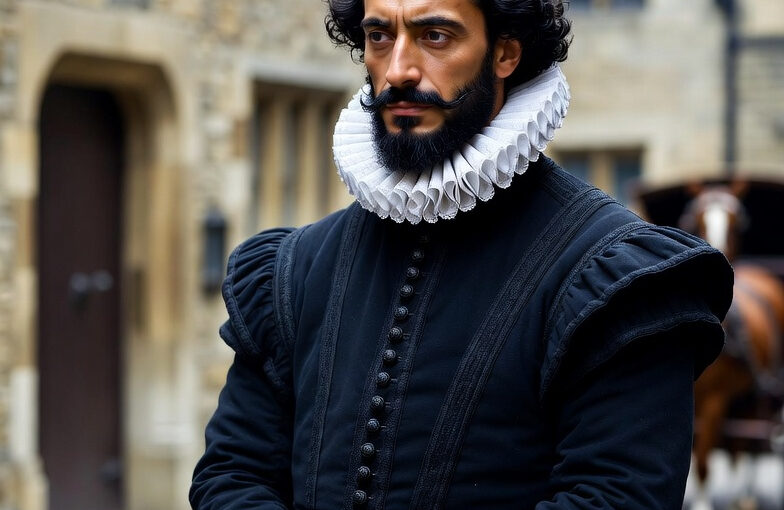

Award winning Peter Akroyd recommends avoiding pigeon-holes

One of Britain’s most versatile and trusted writers believes research is the key for anyone wanting to produce books that matter.

Peter Ackroyd is an award-winning biographer, best-selling novelist, celebrated historian, engaging essayist, talented poet, and respected journalist.

As well as being one of Britain’s most prolific authors, the 73-year-old is definitely one of the most diverse, and has adapted styles to write both documentaries and dramas for television.

But behind every one of his 63-or-so bestsellers are dozens upon dozens of hours of research – and also visiting each of the locations.

He explained: “I read as much as has been written about the characters that I am going to write about.

“I could read 300 or 400 books on any one subject.

“I regularly work on three different books in any one day – I will work on a biography, a history and also the next project.

“I always walk the places I write about, as well.

“In my opinion people are affected by location – a street, an alley, a house – and the inhabitants are deeply affected by the nature of terrain, and the history of the terrain beneath their feet.”

Peter Ackroyd has spent more than five decades producing some of the finest and most influential books written in the English language.

His biographies of Dickens, T S Eliot, William Blake, Charlie Chaplin, and even Shakespeare are rightly regarded as authoritative.

His novels such as Dan Leno and the Limehouse Golem, Hawksmoor, and English Music are ground-breaking.

And his historical studies of locations including London, Ancient Rome, and Ancient Greece have received both academic and more widespread plaudits.

Peter also produced an illustrated six-book series of the world’s most-defining moments in history for children.

But where does the versatility and drive come from – and can other writers follow a similar approach?

Peter said: “It doesn’t matter about the quantity or variety of work you do – what matters is the voice behind it.

“I enjoy all disciplines of writing equally, they all have a different function.

“The subjects come to me, I don’t go to them – something worth thinking about.

“The only principle I really use for biographies is that the subject should be born in or near London.”

Peter was raised in a strict Catholic household on a council estate in London’s East Acton.

While many new authors start publishing later in life, he knew long before gaining scholarships for Cambridge and Yale that he wanted to be a writer.

Peter continued: “I became a writer when I was seven or eight – a play about Guy Fawkes – and I’ve never ceased to be interested in writing ever since.

“I learned the art of writing – not at Cambridge or Yale – but when I became the literary editor of The Spectator.”

Awards are just the icing on the cake for Colleen

When chart-topping author Colleen Hoover finished her debut novel Slammed in 2011, she was convinced nobody would buy it.

The only reason she self-published the book the following year was so her mother could download it onto her recently purchased Kindle.

A decade on, Colleen has commanded six of the top ten spots on the New York Times bestseller charts for 2022.

The mother-of-two from Texas is talking from experience when she advises new writers to ignore trends and advice when churning out their chapters.

She explained: “I think that it is really hard to try and write, and write what’s popular—a lot of people focus on that when they are writing a book.

“They do a lot of research to see what will sell… I think that it is really important that you write from your heart, write what’s speaking to you, and ignore everything.

“When I wrote Slammed, I didn’t know what I was doing… I (then) researched and read that you shouldn’t write books with poetry, you shouldn’t write books with college-aged characters. This was right after I finished writing it.

“‘Oh great, nobody will read the book,’ I thought.

“If I had read that before I wrote that book, I wouldn’t have written the book, because I would have listened to what I read.

“So luckily, I just wrote it—wrote it for fun, and didn’t really care about the outside world and what was selling, and it worked out.”

After Slammed and the sequel Point of Retreat received glowing reviews in 2012, sales took off.

Atria Books republished both titles during the summer and Colleen tasted chart success for the first time.

It was at this point she could officially call herself a full-time writer as she gave up her job in social work to concentrate on her novels.

But she maintains that money was still never the driving force in the best-sellers that followed, such as Hopeless, Ugly Love, and It Ends with Us.

Colleen added: “I think that as long as you write something that you’re proud of, then you won’t care if it sells or not.

“Of course, every writer wants to make money, but that shouldn’t be your main focus.

“I feel like readers can tell the difference between the writers who write for the love of writing, and for the love of money.”

Since the self-published release of Slammed, Colleen has gone on to write more than 20 novels and novellas.

While the awards have mounted up along with the number one chart positions, she admits she still writes with little ambition.

Colleen added: “Many disagree with me, but I let go of all expectations when writing a book.

“If I expect to hit the New York Times or sell a certain number of copies, I will be setting myself up for possible failure.

“And then if those goals aren’t met, the joy of writing the book is overshadowed by a sense of failure.

“I’ve had many friends who started out this way, with high expectations for their books, and then became so jaded by the industry that they hate writing now.

“If you write a book and finish a book, that is a huge accomplishment.

“Let that be your only expectation—to write it and be proud of it.

“And then if something happens beyond that, it’s icing on the cake.”

Horror blockbuster James Herbert’s lesson in fear for authors

Here at PublishNation, authors often tell us about the writers and books they love to read, and that inspired them to eventually to pick up the pen themselves.

While James Joyce, J K Rowling, and Hilary Mantel are regularly name-checked, a horror writer who shot to fame in the mid-1970s also commands a place at the top table of popularity.

James Herbert not only introduced a generation to suspense and terror, he also hooked them into wanting more with his gripping chillers such as The Rats, The Fog, and The Survivor.

While his 23 novels have sold close to 55 million copies and have been translated into more than 30 languages, perhaps the greatest legacy he left is that authors today still find fascination and inspiration from his work.

Growing up just a few streets from where Jack the Ripper had brought menace and murder seven or eight decades earlier, it’s not surprising a young James Herbert became intrigued by horror comics and ghost stories from an early age.

Then there were the rats – hordes of them – who invaded the stables where his market-trader parents stored their fruit and vegetables.

Although he had no discernible desire to write after leaving school and graduating from Hornsey College of Art, it was while employed as art director at an advertising agency that he found himself surrounded by copywriters working on their novels.

Some ten months later, his manuscript for The Rats was sent off to six publishers. Within three weeks, he had received two rejections … and an acceptance from New English Library.

‘It was only when the bones of the first devoured victims were discovered that the true nature and power of these swarming black creatures with their razor-sharp teeth and taste for human blood began to be realised by a panic-stricken city. For millions of years man and rats had been natural enemies. But now for the first time – suddenly, shockingly, horribly – the balance of power had shifted.’

With such a blurb, it was no wonder the 100,000-copy first-run of The Rats sold out in three weeks.

In a rare interview, James Herbert described his decision to move from secure employment to the unpredictable world of becoming a full-time author.

“I was working in advertising as an art director for five years in the West End of London. I realised as soon as I was writing books full time – before I was writing them in the weekends and during any other spare time – I had to decide if it was one or the other.

“I had to make the decision to either stay in the job I loved or start this new job which I loved even more, because I was king, I played God, characters did what I wanted them to do; whilst in advertising everything is brought down to a certain level.

“So that’s how the career began, and because I no longer had to work in London, we moved down to Sussex.”

Herbert’s second novel, The Fog – about a deadly fog that brought unimaginable horrors to a remote coastal community – was every bit as successful as his debut.

And his supernatural ghost story the following year, The Survivor, cemented his place amongst the country’s best-selling writers of the 1970s.

Herbert would go on to complete a trilogy of rats novels with the publication of Lair and Domain, and he would explore cults, curses and the paranormal over the next 30 years with a stream of best-sellers.

James Herbert died in 2013 at the age of 69.

He’d written 23 best-selling novels, adapted eight of them for film and television, and provided generations with the inspiration to not only read, but to also write.

His great friend Stephen King said: “Herbert was by no means literary, but his work had a raw urgency.

“His best novels, The Rats and The Fog, had the effect of Mike Tyson in his championship days: no finesse, all crude power.

“Those books were best sellers because many readers – including me – were too horrified to put them down.”

Pleasing classmates was the key to Dog Man author’s success

Hurdles are part of the writing process, but few authors have had to overcome as many as one of the world’s biggest sellers, Dav Pilkey.

The 55-year-old graphic novelist believes his personal difficulties during his teenage years not only shaped him as a storyteller, but also provided the resilience to continue in the face of regular rejection letters from publishers.

These days, Dav Pilkey’s books sell by the millions – his latest seven-book Dog Man series has so far sold 26 million copies – but the origins of the madcap superheroes came from a time when the budding cartoonist was expelled to the hallways by his infuriated teachers.

Diagnosed with ADHD and dyslexia, the young David Pilkey only survived his academic years by being the class clown.

It wasn’t until he earned popularity with his handmade comics that he found acceptance from his peers as the classroom storyteller.

Those early characters which featured in the school cartoons – Captain Underpants, Dog Man, and The Dumb Bunnies – would resurface in later life to become some of the biggest selling stories of the 21st century.

Dav’s talents as a storyteller and cartoonist were not only appreciated by his classmates, as a few years later in college a teacher would provide the springboard to turn his passion into a profession.

Dav explained: “I think the moment that I felt like perhaps writing and illustrating could be a profession for me was when I was in college and I had a teacher who took me aside one day and she said, ‘Dave, you are a very good writer and I love all the cartoons in your notebooks.’

“I was supposed to be taking notes, but I was drawing cartoons instead.

“But she said, ‘Have you ever thought about writing children’s books?’

“And I had never thought of that up until that very moment, but that sent me on the course that has led me to here.”

That nudge in the right direction led to 19-year-old David Pilkey writing his first book, World War Won, and then entering it into a national collegiate competition.

And he won.

The prize was not only to have his book published, but to also take part in a promotional tour across the state of Ohio.

Dav explained: “Having my book published at such an early age was an incredible boost to my self-esteem.

“I was very lucky because I got to go and be sort of a traveling author and I got to go all over the state of Ohio where I grew up and speak at schools and talk to children.

“And so I talked about my experience sitting out in the hallway as a child.

“And I talked about some of the comic book characters I created when I was a kid.

“I would always mention Captain Underpants and it always brought the house down.

“And so at the end of all my speeches all the kids would raise their hand and they’d be like, ‘Are you ever going to make a book about Captain Underpants?’

“So I was like hmm, maybe I should do that.”

The rest, you would expect, is history, but hold on, this is the publishing industry.

It would take Dav many more years before publishers would take a gamble on his graphic novels.

Captain Underpants was one of around half a dozen books that were sent out to publisher after publisher before Dav finally got his break with Scholastic.

Was it his experience at school that prepared the Pizza Hut waiter to persevere with his dream of becoming an author? Who knows.

Dav continued: “I was rejected so many times.

“I remember a book that I did, ’Twas the Night Before Thanksgiving, and it was rejected 23 different times before a publisher finally took a chance on it.

“And it was very difficult with the rejections, especially so early in my career.

“I started to feel like maybe this wasn’t the right path for me – but one of the things that you really have to do is stick with it, you know.

“Not everything comes easy and you have to keep putting yourself out there and keep trying.

“I made a few more picture books and then I started to try to get Captain Underpants published.

“And I made a dummy for the book and I sent it out. It got lots and lots of rejections, but finally it found a home at Scholastic.”

This is the part where ‘the rest is history’. Dav’s weird and wonderful graphic novels have been bestsellers now for almost two decades, with Dog Man: Mothering Heights topping USA Today’s bestseller chart for 2021. Dav also had another four books in the top 100 of 2021.

Chopping and changing is just champion for Raven

Raven Leilani has become an almost overnight sensation with last year’s publication of her debut novel, Luster.

But the 31-year-old is quick to point out that her bestseller changed almost every page when she was writing and rewriting her chapters.

And at one point she was even contemplating killing off protagonist, Edie.

Luster, told through the voice of Edie, is a refreshingly honest view of a black artist’s awkward sexual relationships and hopeless career choices in New York City.

It has earned Raven a host of awards and celebrity fans, including Zadie Smith and Barrack Obama, since its publication.

The former painter, though, reveals that her plotting and planning regularly went out the window as her first novel developed.

And prior to being put under pressure by tutors New York University’s creative writing course, she was working on something completely different.

She said: “I went to NYU with an entirely different novel to work on.

“When my teachers asked me whether I had any real intention behind my project and I couldn’t articulate an answer – and then I started Luster.

“All I knew, was that I wanted to write something that felt honest and urgent.

“Because I was trying to scrabble together pages, I wrote in a panic and edited myself emotionally less, so the work came from a more vulnerable place.

“And some of the most vulnerable subjects for me, I guess, are art and intimacy and failure.

“I knew I was going to write about painting, and I absolutely knew that I was going to write about Edie’s experience in the middle of this open relationship, but the book kept changing as I was writing.

“It still feels crazy to admit this, but Edie was supposed to die.”

Luster explores race, gender and desire through the chaotic life of Edie, as she moves in with her middle-aged white lover, his white wife, and their black adopted daughter.

Prior to beginning her successful novel, Raven honed her craft with poems and short stories, some of which made it to print in periodicals.

Although the majority of her early work – during the five years between finishing college and starting on NYU’s creative writing course – was rejected, she never lost the desire to write.

Raven added: “Between college and NYU, I was mostly concerned with how to pay my student debt and how to pay my rent.

“I would come home after work and write.

“I remember the first time I started submitting poems – I got nothing but rejections.

“But I love writing so much, I was happy to be living in those worlds that I’d made.

“If you are taken with a subject, there is no shame in writing toward it until you’ve exhausted its possibilities. It’s okay to repeat yourself.”

Following the unpredictable Matt Haig

Matt Haig is rightly regarded as one of the modern era’s most adaptable and imaginative writers.

His novels leave critics weak at the knees, his children’s books are met with whoops of delight, and his personal non-fiction books are, well, personal and deeply insightful.

However, the 45-year-old doesn’t believe there’s any real secret to his success.

And the only reason he’s willing to offer a few pointers for anyone hoping to make their own mark in the literary world is that offering helpful tips is a welcome distraction from working on his latest chapter.

Matt explained: “Writing tips are everywhere.

“Everyone from Elmore Leonard down has written them.

“If Shakespeare was alive now, he’d be blogging about where to place an apostrophe.

“Even I’ve written some, and they drive me mad, but they are easier than getting on with my next novel.

“So, here’s some more.”

After studying English and History at university, Matt went on to run his own internet marketing company.

And he published several well-received guides on e-commerce and branding as he built up his business.

Within a couple of years, though, his first novel, The Last Family in England, which is loosely a canine influenced version of Shakespeare’s Henry IV Part I, made an impact on both sides of the Atlantic.

Two years later, Dead Father’s Club, with more than a hint of Hamlet within the plot, was every bit as successful.

Rather than continue his charge up this ladder, Matt side-stepped expectations by producing his first children’s novel, Shadow Forest.

And it wasn’t long until the awards began to build up.

Ever since, he has been adding to his arsenal with exceptionally good novels such as The Humans, How to Stop Time, and most recently The Midnight Library, while also producing memorable children’s fiction, such as Father Christmas and Me and Evie in the Jungle.

And his memoirs stemming from a mental breakdown at the age of 24, Reasons to Stay Alive, topped charts all over the world.

So just how does the father-of-two from Nottinghamshire continue to produce such diverse and dynamic work?

Reluctantly, Matt continued: “If you are only writing for money, you probably won’t make any.

“Don’t write for the market – books aren’t cornflakes.

“Write for you; write because you have to.

“Write because the whole world is conspiring to kill our imaginations and only books can save them.

“Write because in a world where governments and corporations don’t want us to think, writing is a revolutionary act.”

And just to stall work on his latest novel for a few minutes more, here’s some more wisdom from Matt Haig:


  1. Write the book you most want to read. That will be the best book you can write.
  2. The first page of your first novel is the most important thing you will ever write.
  3. Raise your effort. Lower your expectations.
  4. Read Graham Greene. He infects you with greatness.
  5. The hardest bit of writing always comes at the 30,000 word mark. Keep going. After 50,000 the hill slopes in your favour.
  6. Don’t ever start a novel with the weather. Unless you want to start a novel with the weather. In which case, do it.
  7. Adverbs are shit. Except when they’re not, he said unhelpfully.
  8. Don’t fall in love with yourself (if you write ten words, delete five).
  9. Ignore discouragement. You’ll never know real negativity until you tell people you are writing a novel. The last thing a human who spends their day selling home insurance in an office that smells of egg sandwiches and despair wants to hear is that their old school friend is going to be an international bestselling author. So, ignore them. All of them.


For more information visit Amazon where Matt Haig’s books are available.

Roots and Rejection: the secrets of success for Shuggie Bain author

Rejection is something Booker Prize winning author Douglas Stuart believes all authors should expect.

But he believes remaining loyal to your roots can help in finally overcoming the hurdles.

The 45-year-old fashion designer from Glasgow received more than 30 refusals before his debut novel Shuggie Bain, made it to print.

The heart-wrenching story of an effeminate teenager growing up on a tough working-class Glasgow housing estate became one of 2020’s biggest sellers.

As well as winning the Booker, Douglas’s debut has gone on to be translated into 38 different languages and plans are in place for film version of the book.

But for many of the ten years it took to write, it didn’t look like Shuggie Bain would ever reach the bookshelves.

Douglas explained: “The rejection is just part of the journey.

“I began writing Shuggie Bain in 2008 with no expectation of it ever being published.

“But when I started writing, it really flew through me – I felt as though I had something by the tail.”

Although not autobiographical, the story of a gay teenager looking after his alcoholic mother does mirror much of Stuart’s own upbringing.

Having lost his own mum when he was 16, the youngest of three children had to hold down several part-time jobs to continue his education.

Eventually graduating from the Scottish College of Textiles, Douglas moved to New York where he worked for some of the world’s most famous fashion houses.

But his passion for the written word, as well as his roots, had never left him.

He continued: “Writing was the first thing I wanted to do.

“When I finally got the invitation to publish, I thought ‘this is it!’.

“I had to move to America for work and a career, but I continued to write about Scotland.

“My next book is about Scotland, my third book is about Scotland, and my stories in the New Yorker are about Scotland.

“I was orphaned at 16. I didn’t know my father.

“I had to put myself through high school, working four nights a week and at weekends.

“Part of my Scottish upbringing is that you keep your head down and you carry on.”

While Douglas shows great loyalty to his tough Glaswegian upbringing, he admits it wasn’t conducive to becoming a novelist.

Douglas added: “I had wanted to study English and to become a writer, but in the world of my childhood, boys didn’t do such things.

“Studying English was middle-class – even the word ‘English’ was jarring and dangerous in the East End of Glasgow.

“Because of my upbringing, I felt so much like an impostor that I wrote in secret and I told no one.

“Men from the west coast of Scotland are not known for revealing their tenderer feelings.

“Fiction allows me to make sense of things I am unable to express in other ways.

“It took ten years to write the novel because I felt such comfort in the world I was creating.”

Douglas Stuart’s second novel, Loch Awe, will be released early in the 2022.

Enter Dangerous Ground with Fearless Dan Brown

Dan Brown likes to address the big questions when approaching his novels.

Whether it’s the Bible, freemasonry, the Church, evolution, or artificial intelligence, the 57-year-old is never afraid to turn over the controversial taboo stones when creating a plot.

With sales of more than 200 million print copies, the man behind The Da Vinci Code, Angels & Demons, and Origin is the perfect guide for taking your writing into the most challenging of terrains.

Rather than starting out on safe ground, Dan encourages all budding writers to explore, ask questions, and make a habit out of getting it wrong.

He said: “It’s not so much about writing what you know – but write what you want to know. Educating yourself is part of the fun.

“Research is vitally important. Go to the places you want to write about; explore them.

“I often go to places that are going to feature in a novel and I get there and think ‘wow’ and suddenly my story evolves.

“Write and keep writing.

“Write the wrong thing a few times and sooner or later you’ll start to write something you want to share with the world.”

Challenging perceptions and questioning things like religion and spiritual teachings through his fiction can come at a cost.

Raised Episcopalian in New England by educationalist parents, it was his introduction to astronomy and the origins of the universe in ninth grade which planted seeds of doubt regarding his own faith.

The publication of the Robert Langdon series of novels led to heavy criticism from both religious and literary sources.

Dan continued: “The wonderful thing about controversy is that it creates dialogue and, as writers, I think that’s our job to say, ‘Here’s one way you can think about this, but here’s the other way you can think about it’.

“My advice to writers is that you’ve got to write something that you’re passionate about, that really excites you.

“The irony is that I’ve really come full circle.

“The more science I studied, the more I saw that physics becomes metaphysics and numbers become imaginary numbers.

“There are enormous parts of the human experience and science that make no logical sense, no rational sense, and certainly imply that something else is going on.

“I would not be surprised to find that there is some good big thing.

“The religions of the world have come up with some pretty interesting tales about where we came from and why we’re here. I don’t think any of them are true, but I’m open.

“The further you go into science, though, the mushier the ground gets. You start to say, ‘Oh, there is an order and a spiritual aspect to science’.”

One science that Dan has mastered as a writer is the creation of suspenseful storylines.

Over the past 25 years his exciting thrillers have been translated into 56 languages as readers become absorbed in the adrenalin-fuelled plots.

Dan added: “Suspense is all about making promises to your reader.

“You promise them that if they keep reading you will tell them what is going on – this way they want to keep reading and reading.”

Fanfiction and self-publishing led author Erika (E L James) to billion-dollar sales

Could you follow in the footsteps of the self-publishing author who went on to sell 125 million books and be named in the Top 100 Most Influential People?

Realistically, most new authors who self-publish their way onto the page will never likely be able to give up their day job.

But there are exceptions.

And there can be no greater exception than Erika Mitchell.

The mother-of-two, heavily influenced by the Twilight books and films, published her own fanfiction on kindle under the pseudonym Snowqueens Icedragon in 2008.

Encouraged by the thrill of seeing her work in print, a year later, under the new pseudonym E L James, she began work on the erotic novel Fifty Shades of Grey.

Again, she self-published – only this time the hundreds of downloads and on-demand print sales each month became thousands.

When Fifty Shades of Grey was re-released by Vintage Books in 2012 it became the fastest selling paperback of all time in the UK.

The taboo breaking trilogy, which also includes Fifty Shades Darker and Fifty Shades Freed, went on to break sales records all over the world.

But what has taken a history graduate, who was working as an assistant at the National Film and Television School in England, to a place on Time magazine’s World’s 100 Most Influential People?

And how did a self-publishing fan writer suddenly become one of the wealthiest authors on the planet?

To follow in the footsteps of E L James it helps to take a closer look at her work and her approach.

The former production assistant admits ‘writing used to be my hobby’.

It was a hobby that, when suddenly influenced by Stephenie Meyer’s Twilight books, saw Snowqueens Icedragon become something of an internet hit with her fanfiction.

In a bizarre twist, it’s now her Fifty Shades trilogy which attracts the most fanfiction on the web – tens of thousands of stories and counting.

In a rare interview E L James disclosed: “Those characters feel like they belong to everyone now. This was all born of fandom.”

Influences are critical for any new writer. But here’s where Erika differs from most.

Rather than hoping to appeal to high-brow critics, she was writing for fellow fans. As that fanbase moved from vampire romance to bedroom masochism, so did her writing. If you look closely at the Fifty Shades books, there are grammatical mistakes aplenty… but who cares? Not Erika or her readers.

When putting pen to paper, it’s maybe a good idea to decide whether you would prefer critical acclaim or commercial success.

Look back at some of the early reviews of Fifty Shades and you will notice plenty of cynicism and even anger in the columns of newspapers, websites and magazines. But the publicity, whether it was negative or occasionally positive, just added to the wave of whispered enthusiasm, mainly from middle-aged women. The lesson from Fifty Shades is readers know what they want more than the critics do.

Another lesson to take from the early rubbishing of Erika’s first Fifty Shades book is that she stood by her characters, her narrative style, and her fondness of fetish. The second and third instalments, like Fifty Shades of Grey, sold by the millions and were translated into around 60 different languages. Again, readers know what they like.

E L James is the first self-published author to become a billion-dollar-earning global superstar – she won’t be the last.